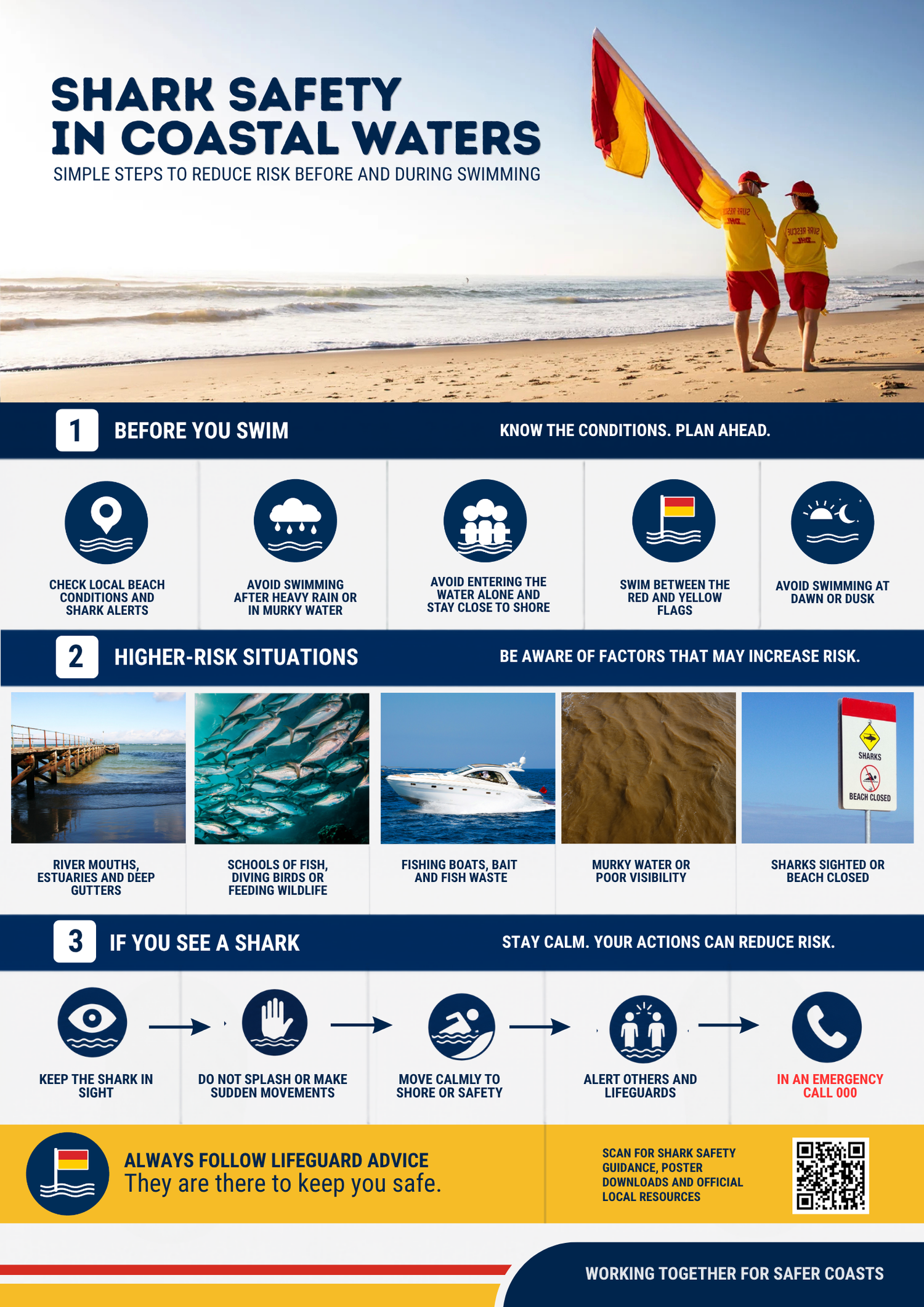
Safer decisions begin before entering the water.
Shark Aware provides research-informed public education for people using beaches and coastal waters.
Before swimming, surfing or diving, check the beach, observe the water and look for current advice from the authorities responsible for that coastline.
Water clarity, recent rainfall, river outflow, fishing activity, baitfish, feeding wildlife and official warnings can all provide useful context when deciding whether to enter the water.
Where lifesavers or lifeguards are operating, follow their directions, observe beach closures and swim between the red and yellow flags.
Read the conditions around you.
Coastal conditions vary between beaches and can change throughout the day. These observations do not determine whether a shark is present, but they can provide useful context before entering the water.
Swim between the flags.
Choose a patrolled beach where possible and remain between the red and yellow flags while the lifesaving service is operating.
Flags identify the supervised swimming area. Always follow directions given by lifesavers or lifeguards at the beach.

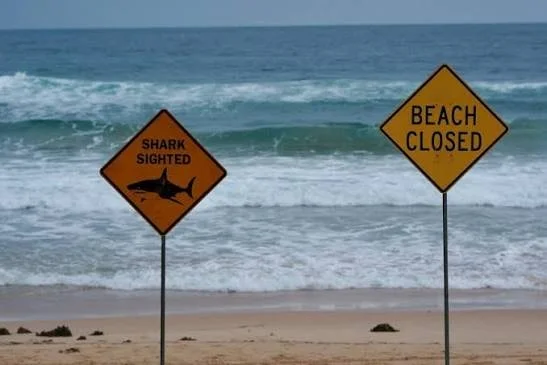
Check warnings and closures.
Check beach signage, current alerts and temporary closures before entering the water.
Advice issued by lifesaving services, councils and government authorities should take priority over general safety information.
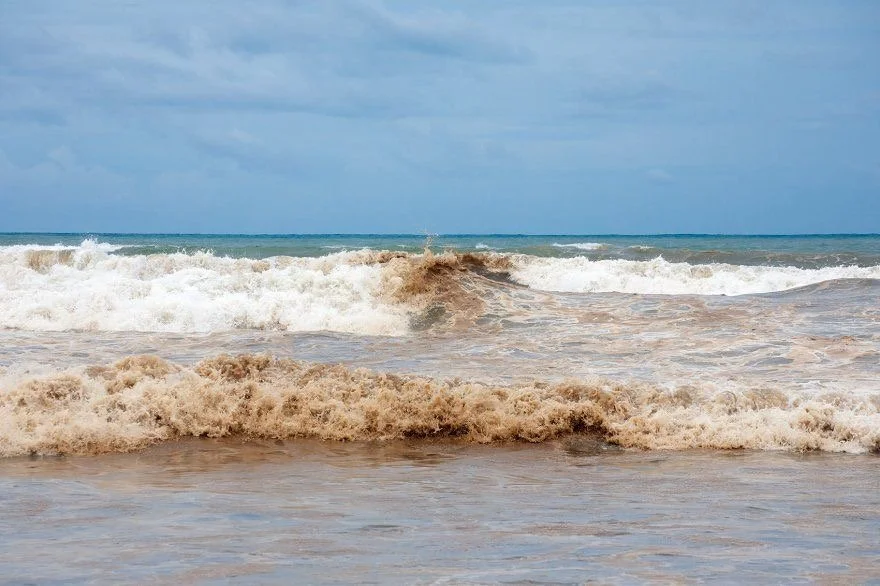
Look at the water.
Heavy rainfall, flooding and river discharge can reduce water clarity and change conditions along the coast.
When water is heavily discoloured, murky or difficult to see through, consider delaying entry or choosing another location.

Notice feeding activity.
Schooling baitfish, repeatedly diving seabirds and feeding marine wildlife can indicate concentrated prey within coastal waters.
These observations do not confirm that a shark is present. They do indicate increased biological activity and provide useful context when assessing conditions.
Keep clear of active fishing.
Avoid entering the water close to active fishing, baited water, fish-cleaning areas, discarded catch or vessels handling fish.
Fishing activity can create localised concentrations of bait, catch and fish material within the water.

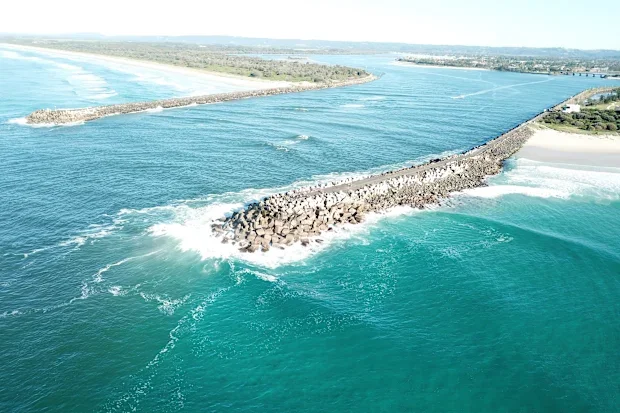
Take care around river and harbour mouths.
Freshwater discharge can alter visibility, sediment movement and biological activity around river, estuary and harbour entrances.
Conditions may change considerably following heavy rainfall or flooding, particularly where freshwater meets coastal waters.
Some coastal conditions
warrant greater caution.
No single environmental sign can determine whether a shark is present.
Greater caution is appropriate when several changing conditions occur together, including reduced visibility, recent rainfall, river discharge, concentrated prey or active fishing.
If conditions are difficult to assess, choosing not to enter the water is a reasonable safety decision.
Stay calm. Your actions can reduce risk.
If a shark is observed nearby, remain aware of its position, avoid sudden movement and move calmly toward shore or another place of safety.
Keep the shark
in sight.
Maintain awareness of the shark's position while preparing to leave the water.
Do not splash or make sudden movements.
Remain controlled and avoid unnecessary movement in the water.
Move calmly to shore or safety.
Leave the water in a controlled manner and move toward the nearest safe exit point.
Alert others and lifeguards.
Warn people nearby and notify an on-duty lifesaver or lifeguard where available.
In an emergency,
call 000.
Call Triple Zero where urgent police, fire or ambulance assistance is required.

Triple Zero is for life-threatening or time-critical emergencies.

About this
guidance
Shark Aware provides general educational information intended to support public awareness of sharks and coastal conditions. It does not determine whether sharks are present at a particular location and does not replace current advice issued by lifesaving services, beach managers, government authorities or emergency services.